






Educate a youth in his own way, from Chanoch the cobbler to the Charedi warrior

Who decided that a boy who could not find his place on the yeshiva bench cannot find Hashem on the battlefield?
In Parashat Bereshit we meet a mysterious and singular figure:
“And Chanoch walked with God, and he was no more, for God took him” (Genesis 5:24).
According to Chassidic tradition, Chanoch was a cobbler, and with every single stitch he brought about yichudim, unifications, for his Maker.
The Lubavitcher Rebbe explains the depth of this: the shoe of all things, the lowliest of a person’s garments, teaches us that holiness can enter even the most physical corners of reality.
Chanoch had no need to flee the world in order to draw close to Hashem. He found Hashem inside his work.
And here we arrive at the verse in Mishlei:
“Educate a youth according to his way; even when he grows old, he will not depart from it” (Proverbs 22:6).
King Shlomo does not say “educate a youth according to your way.” He says “according to his way.”
Every boy has a different soul, different strengths, a different mission.
One boy flowers in the world of Torah, in study and in steady perseverance. Another struggles to find his place within the yeshiva framework, yet inside him burns a fire of action, responsibility, leadership and mesirut nefesh, selfless devotion.
And here our responsibility as educators begins.
We must never confuse a boy who has not found his place in yeshiva with a boy who has no place in Hashem’s world.
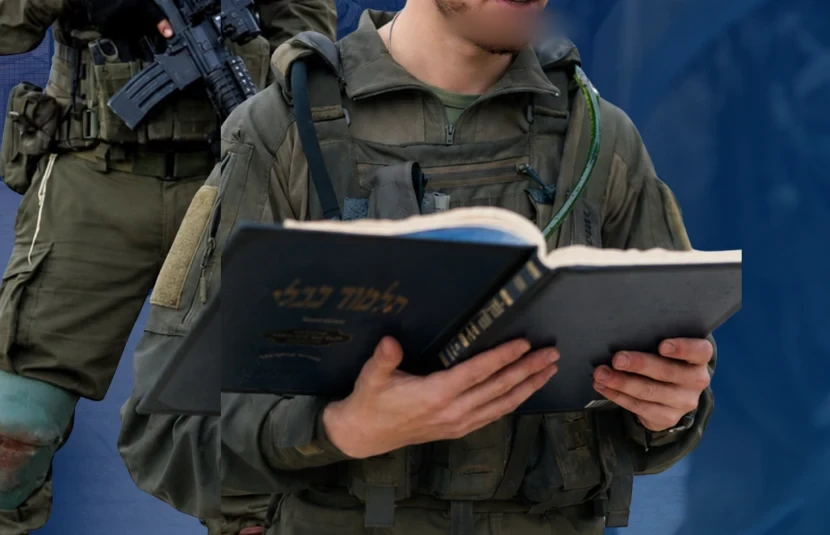
Sometimes the very boy who could not sit for hours before a page of Gemara is able to stand for hours on guard, to carry a wounded friend on his shoulders, to be the first into danger and the last to leave his comrades.
That same boy, who perhaps could not prove himself in one setting, suddenly reveals strengths of soul no one knew he had.
He has not become a different person. We have finally found the right path to reach his soul.
From Chanoch the cobbler to Chanoch the warrior
Chanoch brought about yichudim as he stitched shoes.
And the Charedi combat soldier can discover holiness as he laces up his army boots, puts on his uniform, shoulders his rifle and goes out to protect Jewish lives.
Chanoch’s shoes and the soldier’s boots are not the same, yet one foundation runs beneath them both:
even the most physical act can become the service of Hashem when it is done with intention, responsibility and a sense of mission.
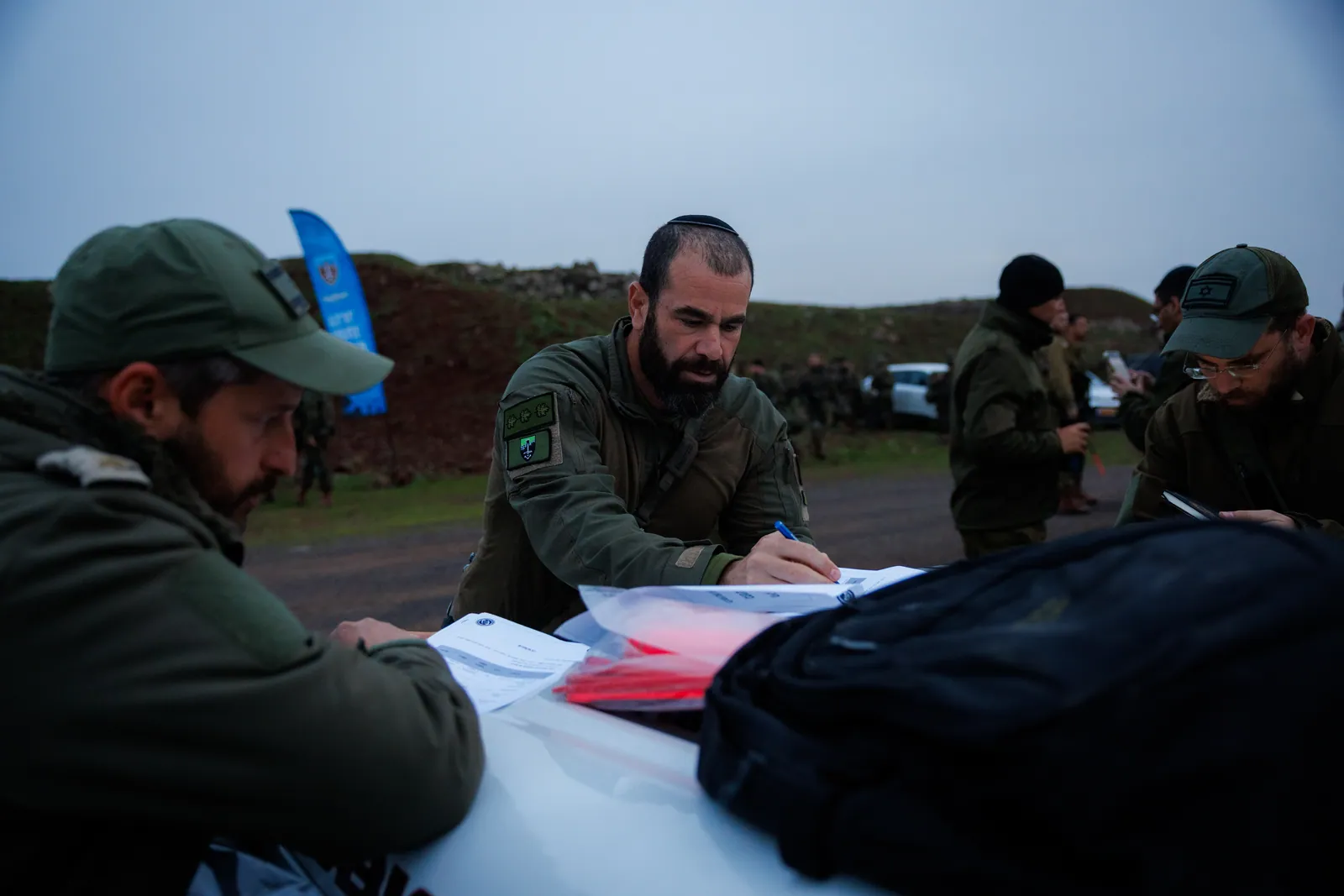
The Charedi combat soldier does not have to leave his faith at the base gate.
He can walk onto the base with the kippah, the tzitzit, the tefillin and the values on which he was raised.
He can be a professional, disciplined and courageous combat soldier and, in the same breath, remain a ben Torah, God-fearing and fine of character.
Nothing of Charedi identity is surrendered here. It finds one more way to express itself: in protecting life and in devotion to the common good.
And what is our responsibility?
It is not to take a Charedi boy and try to turn him into someone else.
It is to recognize his strengths, give him tools, walk beside him and build him a path on which he can grow.
Not every boy is suited to be a combat soldier, just as not every boy is suited to the same course of study.
But every boy needs someone who will believe in him, who will see the good inside him and will not give up on him.
And true success does not end at the swearing-in ceremony or at the close of the track.
It is measured on the day after as well: have we raised a person of faith, with a profession, with responsibility, with a family and the ability to stand on his own two feet?
Did we give him only a uniform and a rifle, or also the tools to build his future?
In closing: the great message
There are those who see a boy who has left yeshiva and say, “We have lost him.”
And I would say:
Perhaps we have not lost him. Perhaps we simply have not yet found his way.
For sometimes it is precisely the boy who could not find his place within the walls of the beit midrash who discovers the depth of his soul as he stands guard over the borders of the Land, when his comrades’ lives are in his hands and he understands that someone is relying on him.
It is not our task to choose his whole life for him. Our task is to help him discover his mission and give him the tools to fulfill it.
Chanoch the cobbler taught that holiness can enter even the stitching of a shoe.
King Shlomo taught that every boy must be educated according to his way.
And the Charedi combat soldier teaches us that sometimes the road to the soul runs through army boots as well.
For not every boy was meant to march on the same track, but every boy deserves the chance to walk a road on which he can draw close to Hashem, give to his people and build his future.
And this, to my mind, is the depth of the verse:
“Chanoch la’na’ar al pi darko,” educate a youth according to his way: do not educate him to be you. Educate him to discover who Hashem gave him the strength to be.